Expanding Treatment Options for Pediatric Sarcoma and Osteosarcoma

Pediatric Sarcoma and Osteosarcoma Research Explores New Treatments
Treatment options for pediatric osteosarcoma and relapsed and refractory sarcomas have remained limited for decades. Children and adolescents with these conditions have few options, and outcomes have remained poor for many patients.
Researchers at UCSF Benioff Children's Hospitals are working to change this trajectory.
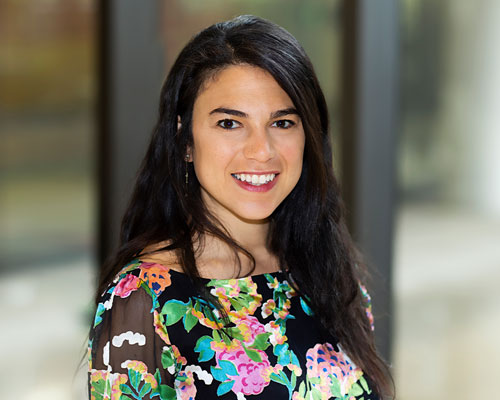
Amanda Marinoff, MD
Amanda Marinoff, MD, a pediatric hematologist-oncologist at UCSF Health, explains how she and her colleagues are developing improved therapies for pediatric patients with these cancers.
Combination therapies for relapsed and refractory sarcomas
CaIRS (Cabozantinib With Ifosfamide in Relapsed/Refractory Sarcomas), a phase 1 trial, is exploring a new drug combination for pediatric relapsed and refractory sarcomas. Cabozantinib is a multi-targeted tyrosine kinase inhibitor, and ifosfamide is a chemotherapy commonly used to treat sarcomas. UCSF is among the few centers in the nation participating in this study.
“Both cabozantinib and ifosfamide can produce responses in sarcoma, but those responses are often not durable,” Marinoff explains. “The goal of the CaIRS trial is to evaluate the safety of this combination and establish the appropriate dosing, while also looking for early signals of activity in patients whose disease has returned or stopped responding to standard treatments.”
Clinical trial options remain limited for patients with relapsed or refractory sarcomas. “Studies such as CaIRS are an important step toward expanding the range of therapies we can offer these patients,” says Marinoff.
CaIRS also includes the collection of tumor and blood samples. These samples will help researchers better understand how patients respond to therapy and identify biological features that may predict which patients benefit most.
Harnessing the power of precision medicine
Efforts such as CaIRS are part of a broader UCSF initiative to develop new treatments for sarcomas. Marinoff’s research focuses particularly on osteosarcoma, the most common primary bone malignancy in children, adolescents and young adults.
Despite aggressive therapy, outcomes for osteosarcoma have remained largely unchanged for more than four decades. About one-third of patients with localized disease and more than 70% of patients with metastatic disease experience poor outcomes.
“We urgently need new treatment strategies,” Marinoff says. “We’re working to move beyond a one-size-fits-all approach to osteosarcoma treatment and toward strategies that tailor therapy based on a patient’s risk and tumor biology.”
Precision medicine is an area of expertise at UCSF. The team believes that leveraging the UCSF500 DNA and RNA sequencing platform, which is already incorporated into clinical care at UCSF, could be key. This precision medicine approach allows physicians to better define molecular features that can help guide diagnoses, prognoses and treatment decisions.
“UCSF is one of the few centers nationwide with clinical-grade RNA sequencing integrated into standard workflows,” Marinoff says. “Because UCSF500 is already embedded in clinical workflows, we can analyze DNA and RNA features of a tumor as part of routine care.”
This approach could significantly improve outcomes for patients with refractory tumors. “We're trying to more accurately define the molecular features that reveal how likely a patient is to respond to the standard of care,” Marinoff explains. “Eventually, we could implement novel therapeutic strategies earlier, rather than at the time of relapse.”
Ultimately, the team is aiming for risk-adapted therapy, which identifies high-risk patients upfront who need intensified or alternative approaches. It can also de-intensify treatment for those likely to do well with standard therapy, sparing them unnecessary toxicity.
“UCSF is a leader in precision medicine and sarcoma and osteosarcoma care, so we provide an ideal environment to advance precision medicine in this space,” Marinoff says. “One of the things that makes UCSF special is how closely clinicians and researchers work together to move new ideas into the clinic.”
Collaborating to advance osteosarcoma care
Marinoff’s team is also participating in a $15 million multi-institutional grant from Break Through Cancer focused on osteosarcoma. This initiative brings together experts and leaders in what the team calls “radical collaboration.”
“We will share data and resources so we can be laser-focused on uncovering new therapies and a biological understanding of this disease,” she explains. “Then, we can translate our findings into new clinical trials.”
Marinoff is working with Alejandro Sweet-Cordero, MD, chief of the Division of Pediatric Oncology at UCSF, who is leading much of this work in his laboratory. Marinoff is involved in developing the clinical trials that will emerge from these discoveries. “Our goal is to move these findings into clinical trials for osteosarcoma in the coming years,” she says.
Break Through Cancer’s shared approach sets it apart in the research space. “This kind of collaborative grant, with so much funding and opportunity for breaking down barriers to collaboration and data sharing, is unprecedented,” says Marinoff. “It is one of many ongoing efforts in the field that I believe will help advance care for this disease.”
Beyond this major initiative, several UCSF colleagues in Sweet-Cordero's lab are working to better understand metastasis and resistance mechanisms and develop new therapeutic approaches. “UCSF is an amazingly collaborative place,” says Marinoff. “Researchers at the bench and clinical trialists are coming together to bring these advances to patients as quickly as possible.”
Marinoff is careful to balance optimism with the challenges. For decades, osteosarcoma has proven resistant to therapeutic advances, and progress won't happen overnight. “We wish the therapies would be here tomorrow, but breakthroughs take time,” she says. “However, I am optimistic that these collaborative projects will generate important and impactful insights that we'll use to establish the treatments our patients need. This is a promising and hopeful time to be in the field.”
Precision Medicine in Pediatric Oncology: Webinar
Referring patients
UCSF welcomes consultations and referrals to its Pediatric Oncology Program and Precision Cancer Medicine Program. Physicians may request second opinions, clinical trial evaluation or specific services while maintaining primary care relationships.
UCSF can also provide consultation on molecular testing results or treatment strategies without requiring patient transfer. “We want the best for every patient and collaborate with their whole care team,” Marinoff says. “We work alongside referring physicians at every stage of care.”
To refer a patient, call 877-822-4453 or complete the online referral form.