Specialized Inpatient Rehabilitation for Children with Complex Needs

UCSF Benioff Children’s Hospitals offer one of the highest-volume dedicated pediatric acute rehabilitation units in Northern California, delivering comprehensive, hospital-based care for children recovering from illness, injury or surgery.
- One of the region’s largest teams of pediatric-trained rehabilitation specialists
- Evidence-based therapies in a family-centered setting
- Private patient rooms, including ventilator-capable beds
- 24-hour medical coverage within a full-service children’s hospital
Together, these elements help each child build strength, confidence and functional independence.
Why refer to UCSF?
UCSF Benioff Children’s Hospitals have a long history of caring for children whose conditions affect function and daily life. Our inpatient pediatric rehabilitation program supports some of the highest patient volumes in Northern California, offering:
- Inpatient rehabilitation for children aged 9 months to 20 years old
- A highly specialized pediatric rehabilitation care team
- Newly renovated private patient rooms
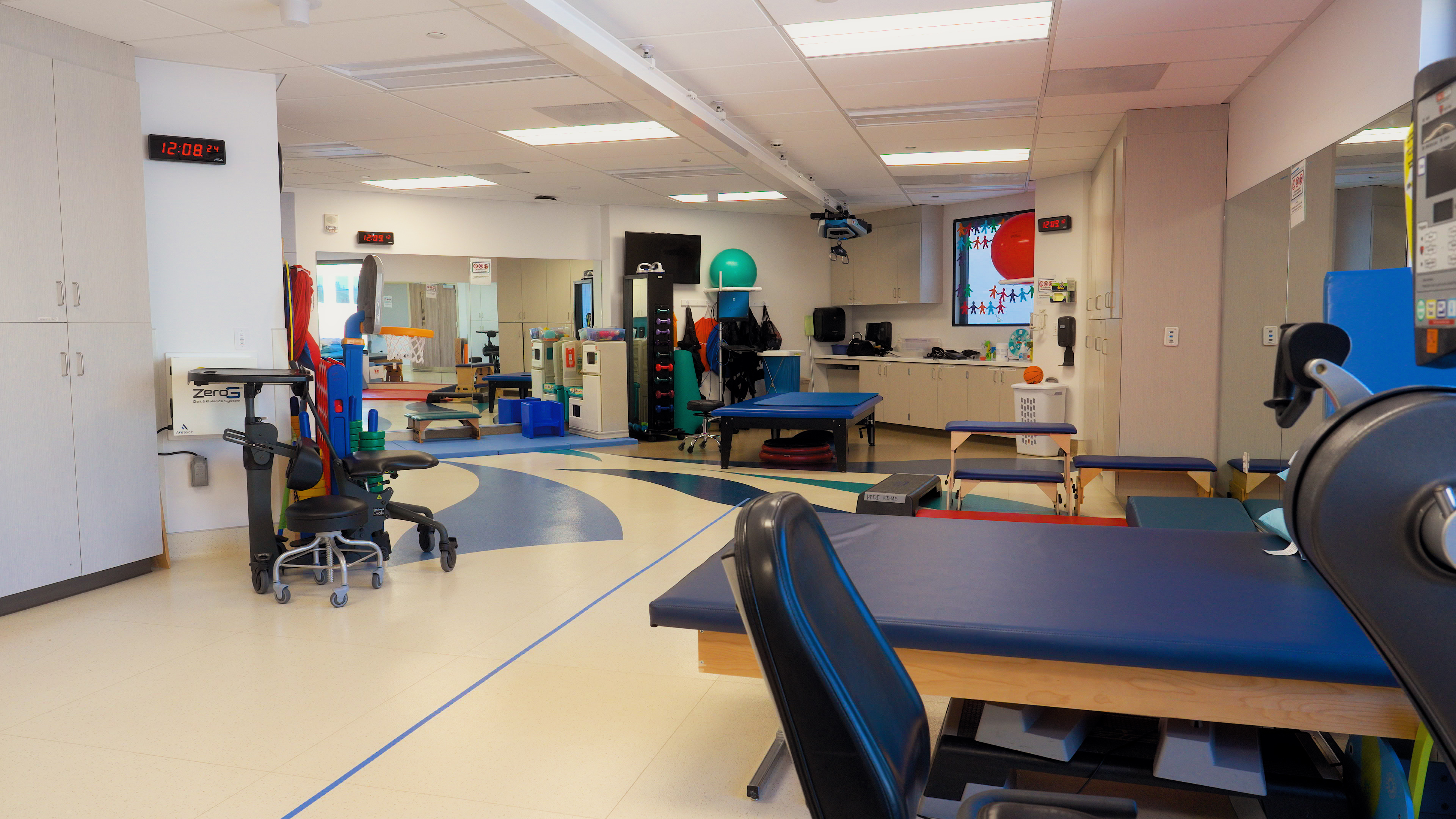
- Advanced rehabilitation technology, including the Tyromotion suite, EksoNR and ZeroG body-weight support systems
- Individualized, goal-driven therapy plans
- Therapy up to six days a week to support steady progress
- Active family involvement, including regular updates and discharge planning
- Coordinated transitions to outpatient therapy and community-based services
2025 inpatient rehabilitation outcomes
Outcomes are measured using standardized tools such as the WeeFIM (Functional Independence Measure for Children).
- 5 hours (average) of therapeutic intervention per scheduled therapy day. This includes physical therapy, occupational therapy, speech therapy, recreational therapies (child life services, art therapy, music therapy), psychology and spiritual care.
- 9 days (average) in rehabilitation program
- No unplanned transfers to acute medical floor
- 86.7% of patients discharged to home*
*13.3% of patients not discharged to home include patients who completed the rehabilitation program, then discharged to acute medical service to complete the remaining tracheostomy/ventilator teaching, or discharged to surgical service for a planned surgical procedure.
Measurable progress for children and families
The team collaborates closely with families to:
- Minimize the impact of a child’s disability and maximize participation in daily activities and play
- Tailor rehabilitation goals and treatment to each child’s age, baseline level of function and medical, psychological and cultural needs
- Help children in the program make measurable gains in mobility, communication and daily living skills
- Support independence and readiness to return home, to school and to community life
When to refer
When a child experiences a sudden decline in function due to illness, injury or complex surgery, early referral to inpatient rehabilitation can help maximize recovery, restore independence and support a safe transition home. Our program provides intensive, interdisciplinary rehabilitation for patients with conditions such as:
- Brain and spinal cord injuries and related neurotrauma
- Stroke
- Neuroimmunological conditions, including Guillain-Barré syndrome, acute disseminated encephalomyelitis (ADEM) and transverse myelitis
- Brain and spinal cord tumors
- Polytrauma
- Complex post-surgical needs, including amputations, selective dorsal rhizotomy (SDR), lower limb reconstruction and single-event multilevel (SEML) surgery
- Severe deconditioning following prolonged critical illness
Therapies and care team
Treatment is guided by each child’s ongoing assessments, anticipated outcomes and medical and rehabilitation goals. Care is delivered by a multidisciplinary pediatric rehabilitation team that may include:
- Pediatric physiatrists overseeing each child’s rehabilitation care
- Pediatric hospital medicine physicians co-managing complex medical conditions
- Physical, occupational and speech-language therapists
- Rehabilitation nurses
- Psychology, social work and child life services
- Music and art therapy
- School program teachers supporting educational continuity
- Pet therapy with a facility dog
Sample daily program schedule
Daily schedules are individualized based on each child’s needs and tolerance and may include:
- Morning physical, occupational and speech-language therapy
- Rest periods, school instruction and family time
- Afternoon therapy and recreational or creative therapies
- Ongoing care team coordination
How to refer a patient
Call the Pediatric Access Center at (877) UC-CHILD (877-822-4453) or download a referral form.